Postpartum Rage and Art Therapy: What Moms Need to Know
Bringing a new life into the world is often celebrated as a joyful and fulfilling time. But for many new mothers, the postpartum period can be marked by intense and unexpected emotions, especially anger. Postpartum rage can feel like a storm inside and can turn into a sudden outburst of anger. This experience is more common than most people realize. Yet, because it’s rarely talked about, it often catches moms off guard and can feel overwhelming, isolating, and even scary.
If you’re navigating postpartum rage, please know you’re not alone, and you’re not a bad mom. As an art therapist in Denver, I support women in expressing and processing these intense emotions through creativity and self-compassion. Art therapy offers a gentle yet powerful way to work through the anger, guilt, and confusion many moms feel in early motherhood.
What is Postpartum Rage?
Postpartum rage is a physiological response to the exhaustion, overwhelm, and unmet needs that often accompany early motherhood. It shows up as intense, sudden bursts of anger that can feel completely out of proportion to the moment, like snapping at a partner over something small, or feeling fury rise when the baby won't stop crying.
Rather than seeing it as a character flaw, postpartum rage can be reframed as information. Understanding what's driving postpartum rage is the first step toward working through it.
Why Postpartum Rage Happens: A Nervous System Perspective
Why do some new mothers experience postpartum rage? While there’s no one-size-fits-all answer, we do know that early motherhood brings enormous change: fluctuating hormones, sleep deprivation, a healing body, identity shifts, and the emotional weight of caring for a new baby. These layers of stress can lead to deep overwhelm.
When overwhelmed, the nervous system activates a fight, flight, freeze, or fawn response. Postpartum rage is a fight response, a protective emotion that advocates for change. Though society often labels anger as “bad,” it is simply a messenger, offering important insight about unmet needs. With the right support, we can learn to listen to anger without judgment and respond to it with care.
In some cases, postpartum rage may be linked to perinatal mood and anxiety disorders (PMADs) such as anxiety, depression, bipolar disorder, OCD, PTSD, or psychosis. If symptoms persist or worsen, it's important to seek care from a perinatal mental health professional.
How Art Therapy Supports Postpartum Rage
Art therapy offers a safe and expressive outlet for processing intense feelings like postpartum rage. As an art therapist in Denver, I often work with mothers navigating big emotions they don’t always have the words for. Through the use of visual art, like drawing, painting, sculpture, collage, moms can release the emotions they’ve been carrying and reconnect with themselves on a deeper level.
This non-verbal form of expression helps you externalize internal chaos in a supportive environment. Instead of bottling up anger or feeling ashamed of it, art therapy allows you to express and understand your rage compassionately.
Building Self-Awareness and Connection Through Art Therapy
Working with an art therapist gives moms the opportunity to explore the root causes of their postpartum rage. Reflecting on your art with the guidance of a trained professional can help you identify emotional patterns, triggers, and unresolved pain. Through this creative process, you gain not only insight, but the opportunity to feel empowered in your experiences.
Group art therapy can also be a meaningful way to connect with other mothers navigating similar emotional terrain. Sharing artwork and witnessing others' experiences creates a sense of camaraderie, validation, and hope. Simply knowing you're not alone can ease the intensity of postpartum rage and bring relief.
Art Prompts for Exploring Postpartum Rage
Throughout history, humans have turned to art to make meaning of emotional experiences. Below are two gentle art prompts that can help mothers safely explore postpartum rage. These activities are meant to support your healing and are most beneficial when explored in partnership with a trained art therapist.
Please note that the term ‘art therapy’ is reserved for use only by a trained art therapist and their clients.
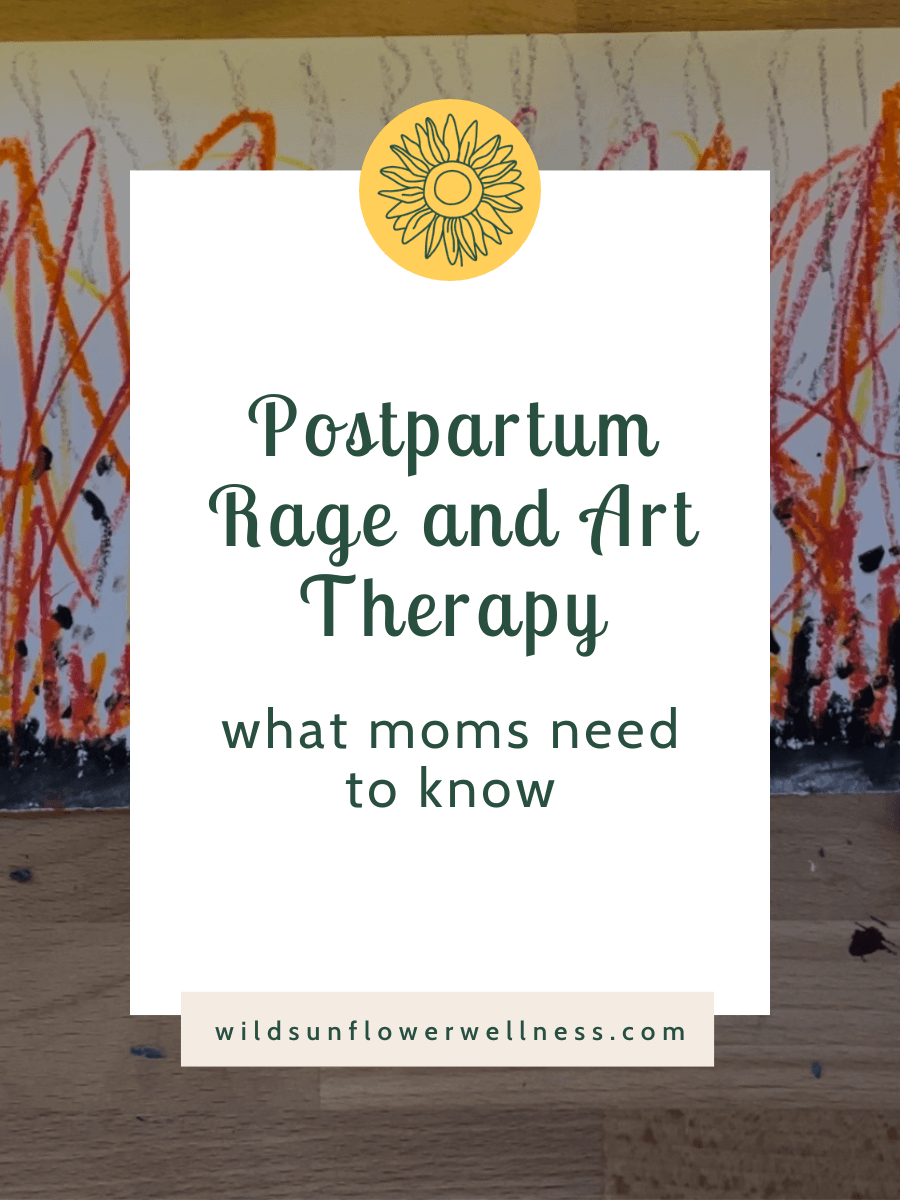
Art Prompt 1: The Storm Within
If your postpartum rage was a natural disaster, what would it be (a thunderstorm, wildfire, tornado, earthquake, tsunami, hurricane, etc.)?
Capture the raw power and magnitude of your chosen natural disaster using art materials, either through expressive brushstrokes, intentional scribbles, or using pressured lines on the page.
Take note of how it feels to get your emotions out of your body and into an expression using the art materials.
Art Prompt 2: My anger is like a _____.
Name the emotion associated with your postpartum rage (ie. rage, anger, overwhelm).
Flip through magazines (or the internet) to find an image that represents postpartum rage for you.
Create an environment or background for the image using art materials.
Find another image to soothe the anger image and paste it onto your artwork.
How does your anger feel when it is soothed? Notice how your mind and body feels after completing this art prompt.
Frequently Asked Questions about Postpartum Rage
Is postpartum rage the same as postpartum depression? No, but they can be connected. Postpartum rage can be a symptom of postpartum depression, postpartum anxiety, or other perinatal mood and anxiety disorders. Even on its own, persistent rage is a signal that you need more support. Please don't let it go unaddressed. You deserve care.
How long does postpartum rage last? That depends largely on how quickly you're able to get support once you recognize what's happening. Support can look different for everyone — connecting with a community of other moms like Nurture Art Studio, working with a perinatal therapist, or simply leaning on family and asking for more help. The sooner you reach out, the sooner things can begin to shift.
Is postpartum rage normal? It is far more common than most people realize, especially for modern mothers who are working, parenting without a strong support network, and navigating a complete identity transformation largely on their own. Postpartum rage isn't something you should have to live with. But if you're experiencing it, you're not broken. It’s a sign that you're overwhelmed — and that's different.
When should I seek professional help for postpartum rage? As soon as you recognize it. You don't have to wait until it gets worse or until you've exhausted every other option. If you've already tried reaching out for support and the rage keeps surfacing, that's a clear sign it's time to connect with a professional who specializes in postpartum mood and anxiety disorders. Early support makes a real difference.
Can postpartum rage affect my relationship with my baby? Yes. It's important to name this, because many moms can carry shame around it. Rage that goes unaddressed can create emotional distance, increase feelings of guilt after outbursts, and make it harder to feel present and connected in those early moments with your baby. Working through postpartum rage with a partner, therapist, a community, or a combination can meaningfully restore that sense of connection and help you feel more like yourself again.
You're Not Alone: Support from an Art Therapist in Denver
If you're feeling overwhelmed by postpartum rage or unsure where to turn, art therapy might be the compassionate space you’ve been searching for. You don’t have to navigate this alone.
As an art therapist in Denver, I specialize in supporting moms through the messy, meaningful, and often intense transition into motherhood. At Wild Sunflower Wellness, I offer individual art therapy sessions and art-based workshops to help you reconnect with yourself, process your emotions safely, and find relief without needing to explain everything in words.
Take the first step toward healing: explore my offerings at Wild Sunflower Wellness, and book a free clarity session to see if art therapy is right for you.